Easter Memory: A Delicate Script for Modern Design
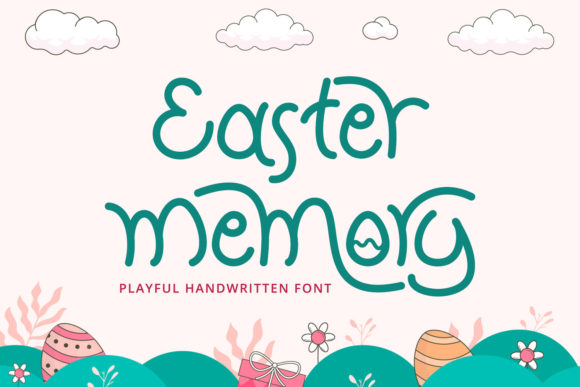
In the crowded landscape of digital typography, finding a typeface that balances elegance with functional usability is often a challenge. Many designers struggle to find scripts that feel authentic without sacrificing readability or technical robustness. Easter Memory enters this space not as a novelty, but as a refined tool designed for creators who demand precision in their visual storytelling. It is a thin lettered and delicate script font that brings a specific kind of sophistication to the table. While its aesthetic leans towards the trendy and stylish, its underlying architecture suggests it was built with serious professional applications in mind.
The primary appeal of Easter Memory lies in its character. It is not a heavy-handed display font; rather, it possesses a lightness that allows it to integrate seamlessly into complex layouts without overwhelming the surrounding content. For professionals ranging from marketers to small business owners, the ability to elevate a design without adding visual noise is crucial. This font achieves that by offering a fluid, handwritten quality that feels personal yet remains highly legible across various media.
Technical Architecture and Glyph Availability
One of the most significant considerations when selecting a typeface for commercial or long-term projects is the completeness of its glyph set. In the world of OpenType fonts, features like ligatures, alternate characters, and swashes can make or break a design's polish. Easter Memory addresses this need through PUA encoding. The Private Use Area (PUA) is a range of Unicode code points reserved for private use, allowing font developers to include extensive libraries of special characters without conflicting with standard text encoding.
This encoding method means you can access all of the glyphs and swashes with ease. For a designer working on a branding project or a high-end editorial layout, having immediate access to these variations is essential. Instead of manually creating custom shapes or settling for generic alternatives, Easter Memory provides a comprehensive toolkit. The swashes add a layer of organic movement that mimics natural calligraphy, while the core glyphs ensure that body text remains consistent and readable. This technical flexibility translates directly into creative freedom, allowing users to customize the look of their work without needing advanced graphic design software skills.
The Role of Thin Lettering in Digital Contexts
The "thin lettered" characteristic of Easter Memory is a double-edged sword that requires careful consideration. In print, fine strokes are often celebrated for their grace. On the web, however, screen resolution and pixel density can sometimes cause thin lines to disappear or appear jagged. Despite this potential hurdle, Easter Memory performs well because of its deliberate stroke weight. It is thin enough to convey delicacy but thick enough to maintain structural integrity at smaller sizes.
When evaluating its performance in real-world scenarios, such as website headers, social media graphics, or email newsletters, the font holds up remarkably well. It does not suffer from the common issue where script fonts become illegible blobs when scaled down. This reliability is vital for entrepreneurs and freelancers who need assets that look good on everything from a mobile phone screen to a large-format billboard. The consistency of the stroke width ensures that the brand identity remains clear, regardless of the medium.
Practical Applications and Workflow Integration
Understanding where Easter Memory fits best requires looking at the specific needs of different creative roles. For bloggers and publishers, the font offers a perfect solution for introducing a human touch to written content. Using Easter Memory for pull quotes, section dividers, or introductory paragraphs can break up dense text and guide the reader's eye more naturally than standard sans-serif or serif fonts. Its trendy and stylish nature helps modernize a blog's aesthetic, making it feel current and curated.
- Branding and Identity: Small business owners can utilize the font for logos, business cards, and packaging. The delicate script conveys a sense of care and attention to detail, which is particularly effective for brands in the beauty, lifestyle, or artisanal food sectors.
- Marketing Materials: Marketers often need to create campaigns that stand out quickly. Easter Memory's unique style allows for immediate visual differentiation. When used for headlines in digital ads or promotional flyers, it captures attention without appearing aggressive.
- Event Design: For educators and event planners, the font is ideal for invitations, programs, and signage. The swashes and alternate characters allow for a level of customization that makes events feel bespoke and memorable.
The versatility of the font extends to its usability within standard design workflows. Because it is PUA encoded, it integrates smoothly with major design platforms like Adobe Creative Cloud, Canva, and other vector-based tools. Users do not need to install complex plugins or worry about font substitution issues during the export process. This reliability reduces friction in the workflow, allowing creators to focus on the design itself rather than troubleshooting technical glitches.
Limitations and Strategic Considerations
No single typeface is a universal solution, and Easter Memory is no exception. Its delicate nature means it is not suitable for all types of content. Using it for large blocks of body text is generally ill-advised, as the intricate details can fatigue the reader's eyes over time. The font is best employed as a complementary element—a headline, a subhead, or an accent. Overusing it can dilute its impact and make a design feel cluttered or overly decorative.
Additionally, the reliance on PUA encoding requires that the end-user has the correct version of the font installed to view the special glyphs correctly. If a client receives a document containing Easter Memory but does not have the font installed, the special swashes may revert to basic characters or display as missing symbols. This is a standard limitation with many specialized fonts, but it is worth noting for those distributing files to non-designers. Ensuring that PDFs are embedded with fonts or that web versions use proper web-font implementation is a necessary step to guarantee presentation effectiveness.
Long-Term Value and Aesthetic Longevity
For professionals investing in digital assets, longevity is a key factor. Trends come and go, but a well-designed script font like Easter Memory possesses a timeless quality. Its style avoids the extreme eccentricities that often plague trendy fonts, ensuring that designs created today will still look relevant in a few years. The balance between "trendy and stylish" and "classic and elegant" gives it a shelf life that supports long-term branding strategies.
The investment in Easter Memory pays off in the quality of the final output. When a creator uses a font that demonstrates thoughtfulness in its construction, the resulting work reflects that same level of care. This perception of quality is critical for building trust with an audience. Whether you are a freelancer pitching a new client or a publisher launching a new series, the typography sets the tone before a single word is read. Easter Memory provides a foundation of sophistication that elevates the perceived value of any project.
In conclusion, Easter Memory stands out as a capable and versatile addition to a professional typographic toolkit. Its combination of delicate aesthetics, robust feature sets via PUA encoding, and reliable performance makes it a strong candidate for a wide range of applications. While it requires thoughtful application to avoid overuse, its strengths in enhancing visual hierarchy and adding a personal touch are undeniable. For anyone looking to refine their design language and add a layer of stylistic depth to their work, this font offers a practical and effective solution.
Ultimately, the decision to incorporate Easter Memory into your workflow should be driven by the specific goals of your project. If your aim is to communicate elegance, creativity, and a refined sensibility, this font delivers. By understanding its capabilities and limitations, you can leverage its full potential to create designs that resonate with your audience and stand the test of time.