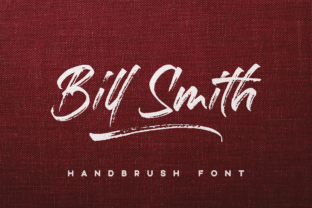
Bill Smith: Bringing Personalized Handwriting to Your Design Projects
You know that feeling when you see a generic font on a wedding invitation or a corporate brochure? It looks clean, sure, but it lacks soul. It feels like every other document out there. That is exactly where Bill Smith steps in. This isn't just another typeface; it is a fast writing brush script designed to inject personality and texture into any visual communication. Whether you are a freelancer trying to stand out or a small business owner wanting to connect with your community, understanding how to use this tool can transform the way your audience perceives your brand.
At its core, Bill Smith mimics the natural imperfections of a real brush hitting paper. It features built-in textures and dynamic swashes that make the letters feel alive. Unlike rigid geometric fonts, this script breathes. It captures the speed and rhythm of a hand moving across a page, complete with the slight variations in line weight that only human touch can provide. When you apply it correctly, you aren't just displaying text; you are conveying a mood, a story, and a distinct point of view.
Why Texture Matters in Digital Design
In a world dominated by flat design and crisp pixels, adding texture can be a game-changer. Users scroll past hundreds of digital ads daily. A clean, vector-based font often blends into the background noise. However, a script with visible grain and organic flow demands attention. The specific qualities of Bill Smith allow it to cut through that clutter without screaming for attention.
Consider the difference between a standard sans-serif headline and one written in a textured brush style. The former informs; the latter invites. The "fast writing" aspect of Bill Smith means it doesn't look stiff or overworked. It looks spontaneous, as if someone picked up a pen right before the camera shutter clicked. This sense of immediacy creates an emotional bridge between the creator and the viewer, making the content feel more authentic and trustworthy.
Real-World Applications for Creators and Entrepreneurs
The versatility of this font lies in its ability to adapt to various contexts without losing its character. Here is how different professionals are actually using it to solve real problems.
- Branding for Small Businesses: Imagine you own a boutique coffee shop or a handmade jewelry studio. You want your logo to reflect craftsmanship and care. Using Bill Smith for your signage or packaging allows customers to feel the tactile nature of your products. The swashes add a touch of elegance that suggests quality, while the rough edges keep it grounded and approachable.
- Content Creation and Blogging: For bloggers and educators, headers are crucial for breaking up long blocks of text. Instead of using a bold serif or a heavy sans-serif for your article titles, try Bill Smith. It adds a personal signature to your posts. If you are writing about lifestyle, travel, or creative processes, this font mirrors the narrative voice of the author, making the reading experience more intimate.
- Digital Marketing and Social Media: In social media graphics, space is limited. You need to grab attention instantly. A promotional graphic for a sale or a new product launch benefits from the energy of a brush script. The varying stroke widths create visual interest even at smaller sizes on mobile screens. It turns a simple announcement into an event.
Scenarios Where Bill Smith Shines
Let's look at a specific scenario. Sarah is a freelance illustrator who sells prints online. She needs to update her Etsy shop banner. Her previous design used a standard, clean font that looked professional but cold. After switching to Bill Smith for her shop title, she noticed a shift in engagement. Customers commented on the "handmade feel" of her branding. The font communicated her artistic process before they even saw her work.
Another example involves event planning. Mark is organizing a local music festival. He needs flyers that look energetic and slightly rebellious. A formal script wouldn't fit the vibe. Bill Smith, with its fast, sweeping strokes, captures the high-energy atmosphere of live music perfectly. The texture gives it a grit that aligns with the rock or indie genre he is promoting.
What to Consider Before You Download
While Bill Smith is a powerful tool, it is not a magic bullet for every situation. To get the best results, you need to understand the context in which it performs well. Typography is about balance, and a script font requires a delicate touch to avoid overwhelming the message.
- Readability is King: Scripts are beautiful, but they should never sacrifice clarity. Because Bill Smith has swashes and varying thickness, it works best for headlines, logos, and short phrases. Avoid using it for body text or long paragraphs. The human eye struggles to track complex scripts over extended distances, which can lead to reader fatigue.
- Pairing with Complementary Fonts: You will rarely use Bill Smith in isolation. It needs a partner. A clean, neutral sans-serif usually pairs beautifully with it. The simplicity of the supporting font allows the script to take center stage. Think of the script as the star and the supporting font as the stage lighting—essential, but not distracting.
- Contextual Appropriateness: Does the tone match? If you are designing a legal contract or a medical report, a fast writing brush script might undermine the seriousness of the content. Save Bill Smith for projects where warmth, creativity, or informality is desired. Misusing a casual script in a serious setting can confuse your audience and damage credibility.
Maximizing the Features for Better Outcomes
To truly leverage the potential of this font, you must pay attention to the details. The swashes—the decorative flourishes at the beginning and end of letters—are not just for show. They guide the eye and create connections between words. When designing a layout, experiment with the kerning (spacing) around these swashes. Tight spacing can make the text feel cohesive and luxurious, while wider spacing can give it a modern, airy feel.
The texture feature is another element that deserves careful handling. In print, the texture adds depth and richness. In digital formats, ensure that the resolution is high enough so the texture doesn't pixelate or look muddy. Sometimes, applying a subtle drop shadow or a color overlay can help the texture pop against a busy background, ensuring the text remains legible while maintaining its artistic integrity.
Bridging the Gap Between Digital and Physical
One of the unique advantages of Bill Smith is its dual nature. It looks fantastic on a website header, but it also translates exceptionally well to physical merchandise. T-shirts, mugs, stickers, and greeting cards all benefit from the illusion of hand-painted lettering. When you order custom goods, seeing the texture of the font printed on fabric or ceramic makes the item feel more premium. It moves away from the mass-produced look and towards something that feels curated and special.
For hobbyists and makers, this font is a direct extension of their craft. It validates the effort they put into their work. When a user sees a label made with Bill Smith, they subconsciously acknowledge the time and care involved in creating the product. This psychological connection is invaluable for building a loyal customer base.
Ultimately, the decision to use Bill Smith comes down to the story you want to tell. If your goal is to communicate efficiency and speed in a sterile environment, you might look elsewhere. But if you want to convey authenticity, creativity, and a human touch, this script is an excellent ally. It transforms static text into a dynamic visual element that resonates with people on a deeper level. By choosing the right tools for the right job, you ensure that your message is not just seen, but felt.